cpeditor
Bitcoin climbed back above $60,000 for the first time in more than a week after Federal Reserve Chair Kevin Warsh suggested that inflation pressures were easing. Solana led gains among major cryptocurrencies, rising about 16% over the past week, while a slump in semiconductor stocks dragged Asian equities lower and cooled the AI-driven rally that has diverted capital away from crypto this quarter.
By Thursday, bitcoin was trading above $60,700 following a sharp overnight rebound, as Warsh’s comments offered relief to a market that had spent most of June trending downward. Speaking at the European Central Bank’s annual forum in Sintra, Portugal, he said “inflation risks have come down” while reaffirming the Fed’s commitment to bringing inflation back to its 2% target.
Warsh stopped short of signaling the Fed’s next move, emphasizing that policymakers would assess incoming economic data before making decisions. Following his remarks, bitcoin reversed earlier losses and pushed back above the $60,000 threshold.
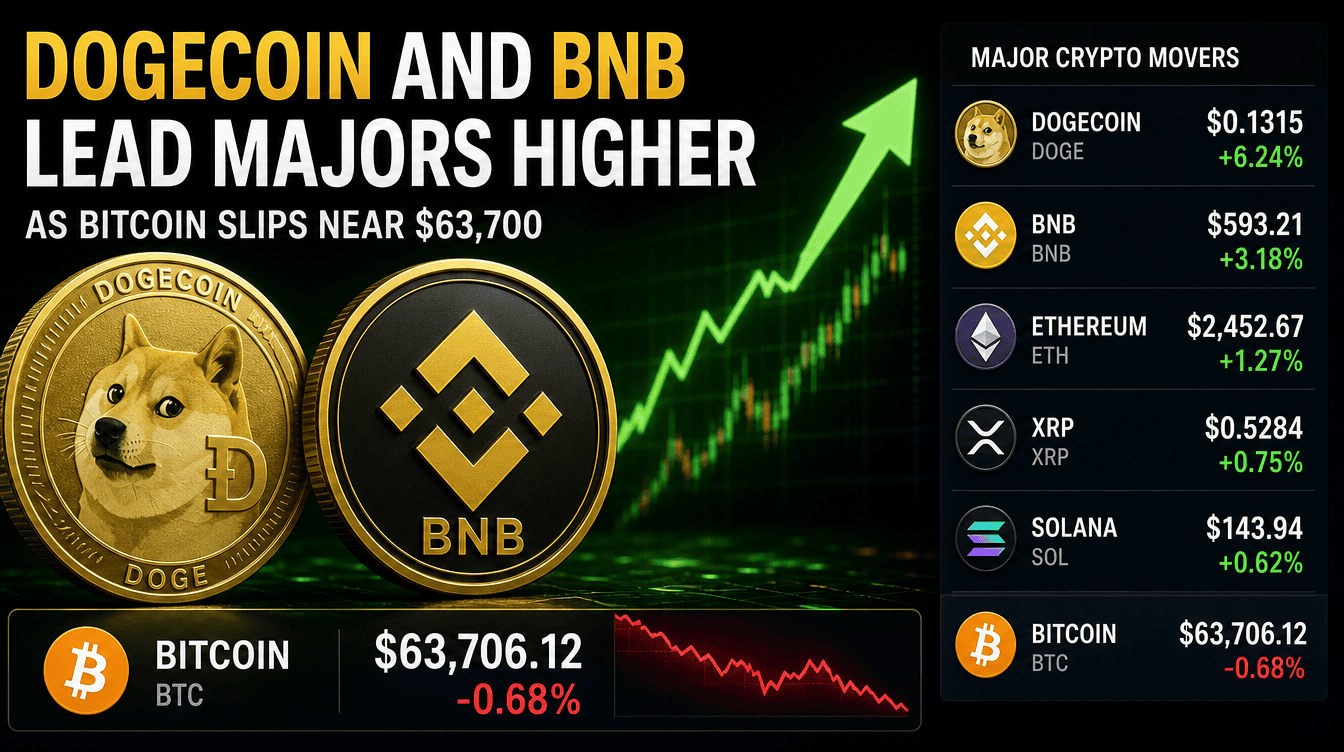
Solana stood out among large-cap tokens, gaining roughly 4% on the day to trade near $78 and posting a weekly rise of around 16%. Ether hovered near $1,630, up about 3%, while XRP held steady around $1.06. Meanwhile, BNB, dogecoin, and Tron showed weaker performance over the week.
In broader markets, equities saw more pronounced volatility. A selloff in semiconductor stocks spread to South Korea, sending the Kospi index down nearly 7% before it recovered some losses. Shares of Samsung Electronics and SK Hynix each dropped more than 6%, while Japan’s Kioxia tumbled 13% after a rally that had pushed the stock up more than 650% this year.
The pullback renewed concerns that the rapid surge in artificial intelligence stocks may have outpaced underlying fundamentals.
Two developments added to the uncertainty. Reports indicated that Meta is building a cloud platform to monetize excess AI computing capacity, raising fears of overinvestment. At the same time, Apple is reportedly in discussions with Chinese chipmakers, a move that could negatively impact South Korean suppliers.
The AI sector has attracted a significant share of investment flows this quarter, coinciding with bitcoin’s decline and contributing to one of its rare consecutive quarterly losses. As capital rotated into chipmakers and AI infrastructure, crypto markets struggled through a weak first half. Any sustained weakness in AI-related stocks could reduce that pressure.
In commodities, Brent crude slipped to around $70.60 per barrel, its lowest level since late February before tensions escalated in the Middle East, as shipping activity through the Strait of Hormuz normalized.
Gold extended its rally for a second straight session, trading above $4,060 per ounce after Warsh’s comments, while the U.S. dollar steadied following two days of gains.
Whether bitcoin can hold above $60,000 will likely depend on whether weakness in AI stocks develops into a broader rotation back into risk assets or remains a short-lived correction.