cpeditor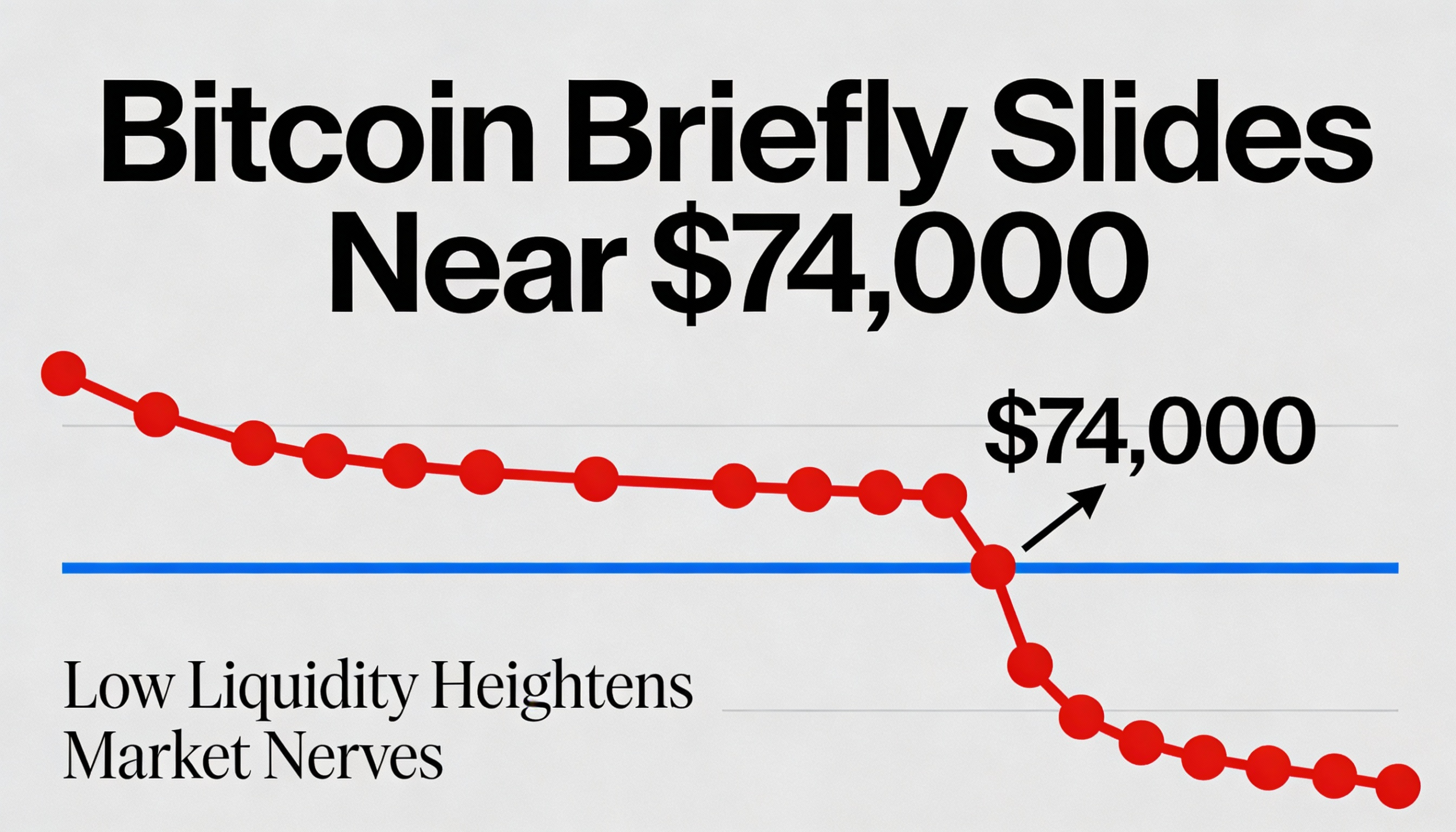
Bitcoin recovered above $76,000 after briefly slipping below support and testing the $74,000 area, a move that underscored how thin liquidity continues to magnify price fluctuations. The rebound came as mixed Chinese factory data offered modest background support, while persistent dollar strength and shallow order books limited follow-through.
The swift V-shaped move reflected fragile market depth rather than renewed conviction. With liquidity sparse, relatively small trades were able to drive outsized price moves, intensifying volatility around key technical levels.
Crypto markets saw another wave of forced liquidations over the past 12 hours, with roughly $510 million in leveraged positions wiped out. Long positions accounted for $391.6 million of losses, highlighting crowded bullish exposure, while $118.6 million in shorts were also liquidated. The imbalance suggests pressure remains as prices continue to trade through thin liquidity zones.
Ether led declines among major tokens, falling more than 8% over 24 hours. BNB, XRP and Solana posted losses of 4% to 6%, while Lido’s staked ether tracked ETH’s drop. Dogecoin and TRON recorded smaller but steady declines as risk appetite weakened across large-cap altcoins.
Limited depth allowed a relatively modest bout of selling to break the $75,000 level and trigger liquidation cascades. At the same time, the lack of resting sell orders enabled dip buyers and short covering to lift prices quickly, reinforcing the market’s sensitivity to positioning.
China’s economic data added context but little momentum. A private January manufacturing survey showed activity edging into slight expansion, while the official gauge slipped into contraction, highlighting uneven growth in the world’s second-largest economy. With Beijing maintaining tight control over the yuan, China’s influence on bitcoin is felt more through global dollar liquidity conditions than through direct capital flows.
Incremental improvements in factory activity may ease recession concerns at the margins, but absent a meaningful pickup in stimulus, currency volatility or liquidity, the data serves more as a stabilizing backdrop than a catalyst for crypto markets.
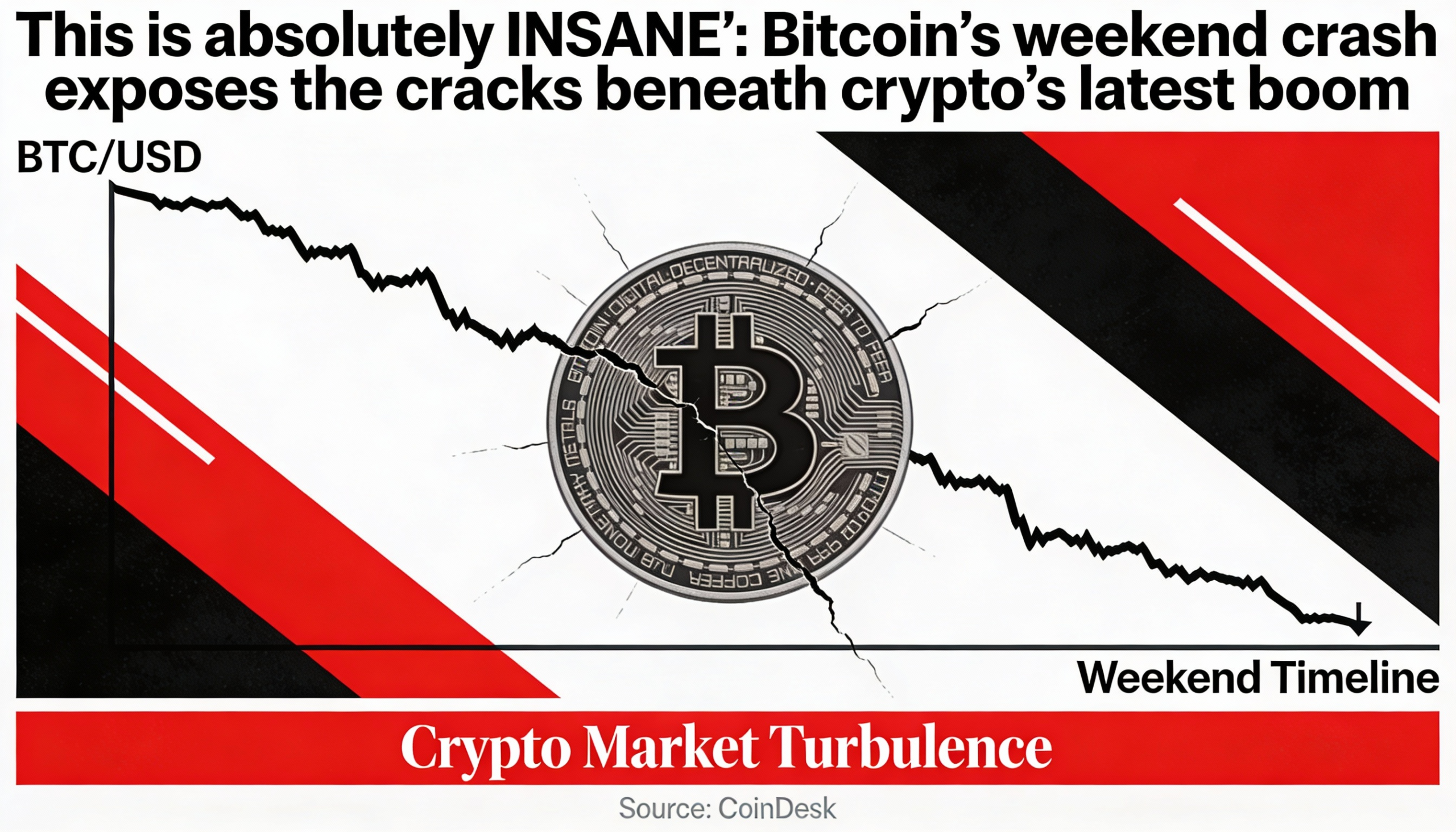
Weekend trading conditions added to bitcoin’s fragility. With traditional markets closed and institutional participation reduced, order books thinned further, lowering the amount of capital needed to push prices through key technical levels.
In such conditions, bitcoin often trades less like a macro asset and more like a leveraged expression of its own positioning, where funding imbalances and clustered stop orders can drive price action for extended stretches.
For now, the rebound above the mid-$70,000s suggests the selloff functioned more as a leverage reset than a structural repricing. With liquidity still shallow compared with earlier in the cycle, both downside wicks and upside squeezes are likely to extend beyond what fundamentals alone would justify.
Until market depth improves or macro drivers such as dollar strength and real yields shift more decisively, bitcoin’s price action is likely to remain driven by positioning and market structure rather than by clear economic catalysts.