cpeditor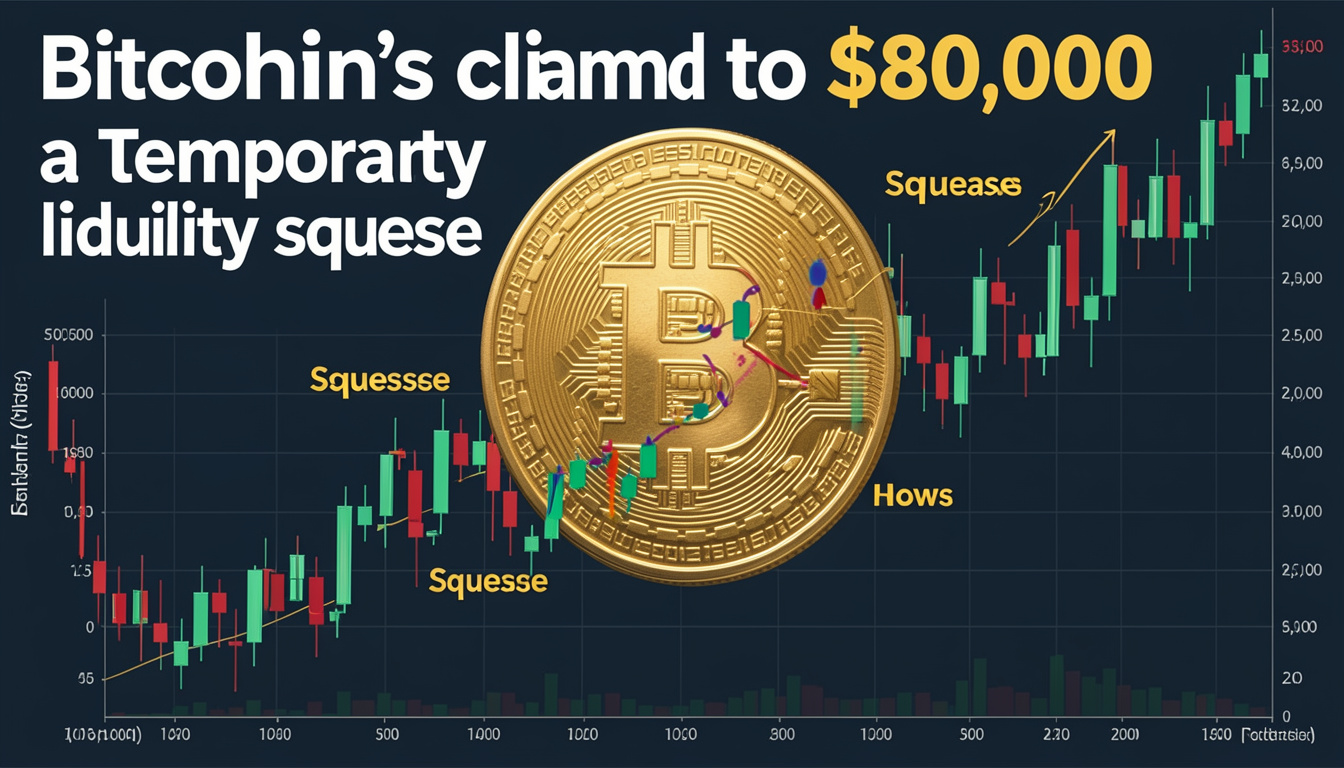
Bitcoin’s onchain data has strengthened to its most constructive levels since early February, but analysts say the broader market structure still points to range-bound trading rather than a decisive breakout to new highs.
In a Thursday note to CoinDesk, Bitfinex analysts said ETF outflows alongside a more hawkish Federal Reserve are effectively forming a “macro ceiling,” limiting upside potential unless a major geopolitical catalyst shifts sentiment.
Long-term holders now control roughly 4 million BTC, an increase of about 300% since late 2025. However, after Bitcoin briefly moved above $82,000 on May 11 and then retreated into the $79,000–$81,000 range, these holders have stepped up profit-taking to around $180 million per day.
Bitfinex said this level of distribution is still relatively subdued compared with previous market cycles, indicating controlled selling rather than panic. The larger concern, however, is realized losses, which are currently averaging about $479 million daily. In healthier conditions, that figure typically sits closer to $200 million, and analysts say the recovery remains incomplete until it normalizes.
Derivatives markets are also shaping near-term price action. Glassnode data shows nearly $2 billion in short gamma exposure concentrated around the $82,000 strike price, creating a “gamma trap” effect. As Bitcoin trades near this zone, dealer hedging can amplify volatility and pull price toward the level.
However, analysts caution the impact may not be durable. Jason Fernandes, co-founder of AdLunam, noted that gamma-driven hedging can accelerate moves toward key strikes but often dissipates once positioning resets, turning those same levels into resistance rather than support. In his view, the dynamic is amplifying volatility rather than confirming a sustained trend.
Institutional flows have also weakened. Corporate buying has fallen sharply, down roughly 80% compared with the prior month. Meanwhile, U.S. spot Bitcoin ETFs saw $635 million in outflows on May 13—the largest single-day withdrawal since January—signaling fading institutional demand.
Market analyst Mati Greenspan of Quantum Economics said the $79,000–$85,000 range should be viewed more as a consolidation zone than a hard ceiling, with price action pausing after recent volatility.
Macro conditions remain an additional headwind. Following the confirmation of Kevin Warsh as Federal Reserve Chair amid 3.8% inflation, markets are increasingly pricing in a “higher for longer” rate environment, with limited expectations for cuts and even potential hikes.
Bitfinex analysts expect Bitcoin to remain range-bound in the near term, with any push toward $82,000–$84,000 likely followed by consolidation. Fernandes described the current setup as “incomplete capitulation,” adding that until realized losses fall toward $200 million per day and institutional demand returns, the $85,000 level remains the key battleground for this cycle.