cpeditor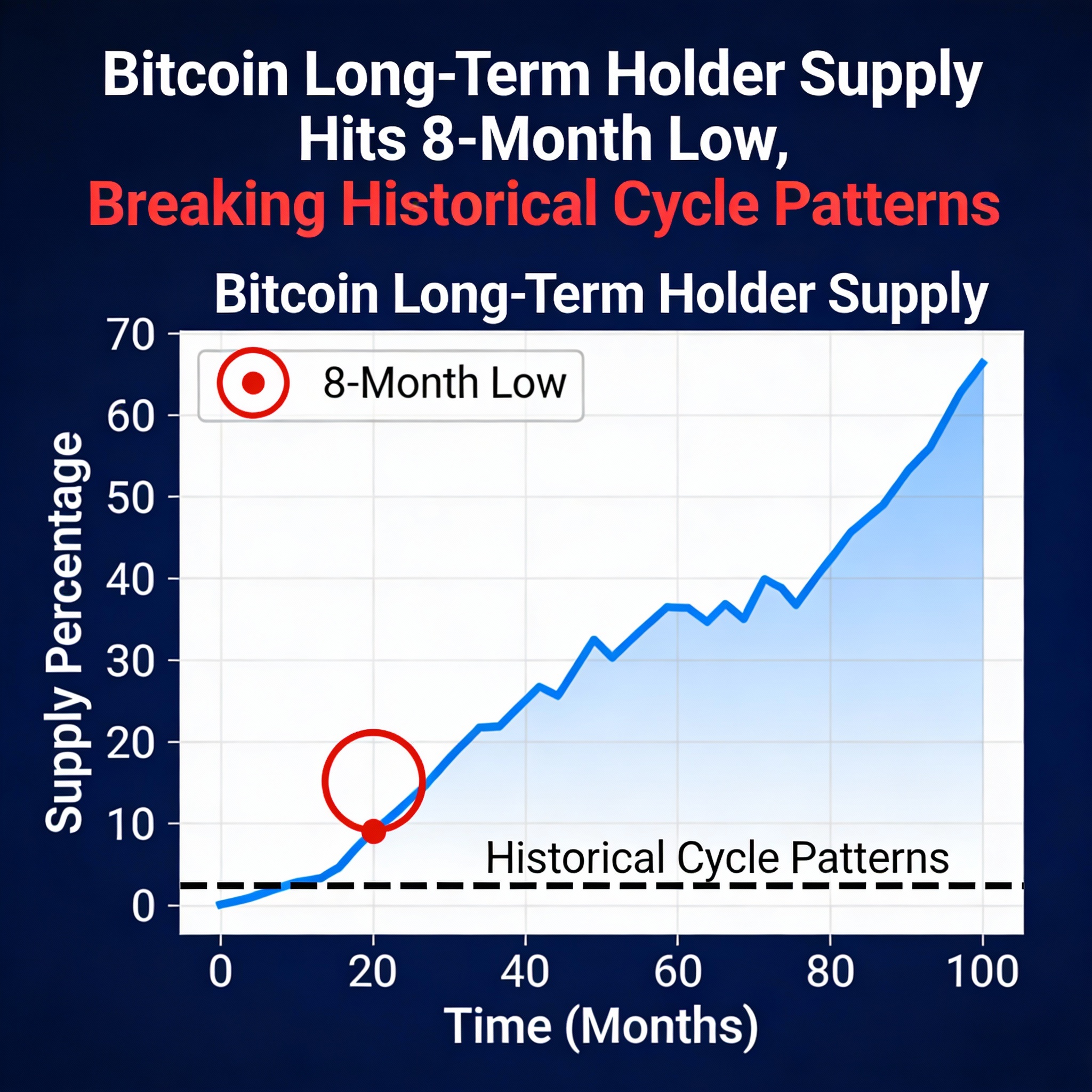
Bitcoin (BTC $88,536.75) long-term holder (LTH) supply has fallen to an eight-month low of 14,342,207 BTC, a level last seen in May, coinciding with bitcoin’s nearly 40% drop from its October all-time high.
Glassnode defines long-term holders as entities that have held bitcoin for at least 155 days, placing the current cohort cutoff around mid-July—anyone who bought bitcoin then and has held since qualifies as an LTH.
This decline marks the third distinct wave of LTH distribution in the current cycle, which began in early 2023. The first wave occurred from late 2023 into early 2024, following the launch of U.S. spot bitcoin ETFs, when LTHs sold into strength as bitcoin climbed from roughly $25,000 to near $73,000 by March 2024.
The second wave emerged later in the year as bitcoin approached $100,000, fueled by optimism around former President Trump’s election victory. The market is now experiencing a third wave of LTH selling, even as bitcoin traded above $100,000 for much of the year.
Why this cycle is different
This behavior contrasts with previous bull markets in 2013, 2017, and 2021, where LTH supply typically followed a single boom-and-bust cycle—bottoming near euphoric peaks before gradually recovering. Instead, the current cycle has seen repeated waves of distribution without a clear blow-off top.
Alec, co-founder of Checkonchain, notes that LTH spending in this cycle is unlike anything observed in recent history, with the market absorbing the third wave of selling remarkably well.
LTH distribution remains one of bitcoin’s largest sources of sell-side pressure and has been a key contributor to the nearly 40% correction from October’s all-time high.