cpeditor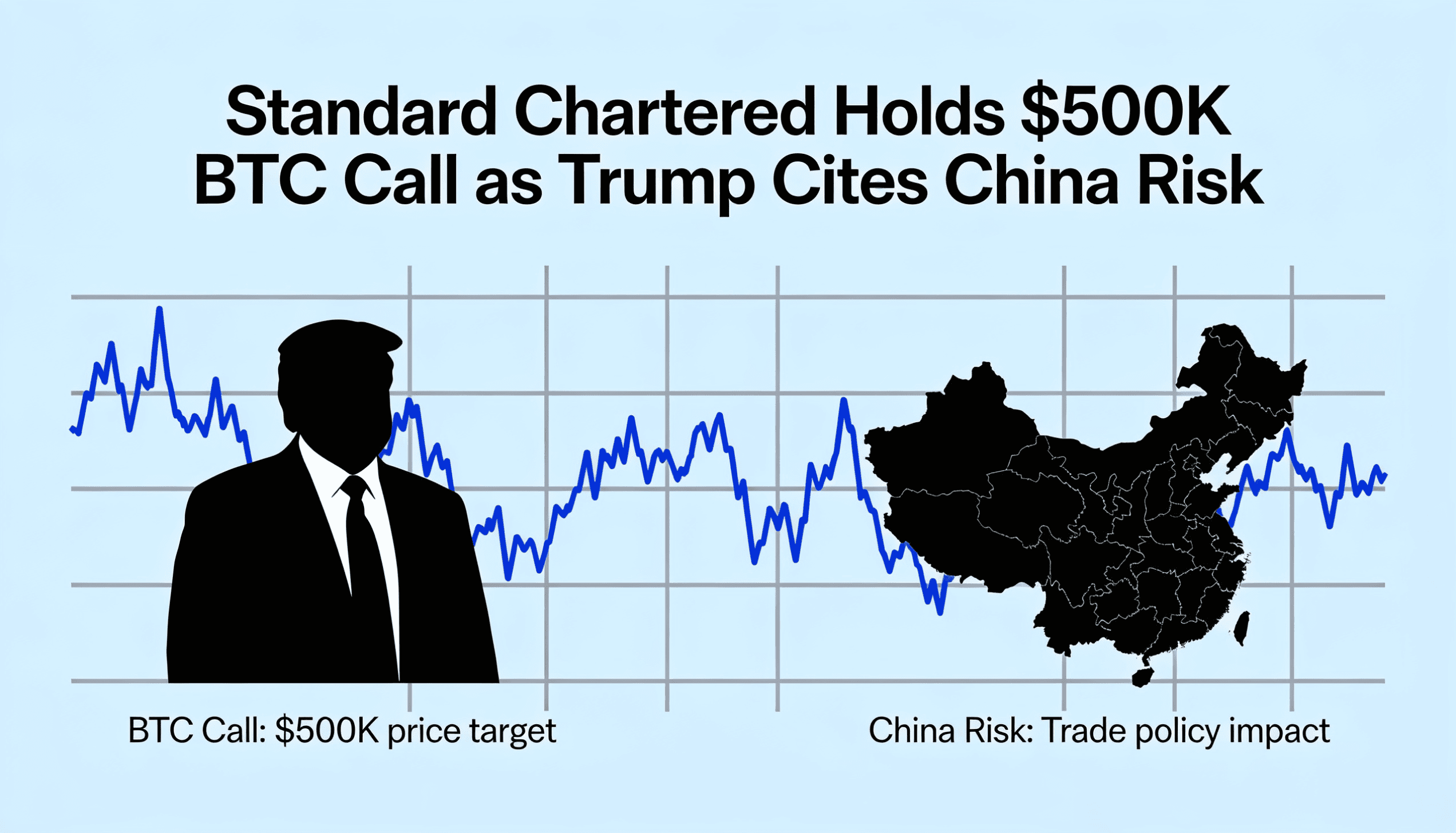
Here’s a cleaner, tighter rewrite with a polished analytical tone:
Standard Chartered’s Geoffrey Kendrick is holding firm on his call that Bitcoin could reach $500,000 before Donald Trump leaves office, even as BTC trades just above $64,000—nearly 49% below its October 2025 peak of $126,198.
While the gap between the current price and that projection is substantial, the bigger question is whether the underlying thesis still stands, particularly after the bank’s earlier $200,000 target for 2025 was not achieved.
Trump’s renewed endorsement of Bitcoin, delivered at a White House event on July 6, has brought fresh attention to the forecast. He framed his support in geopolitical terms, warning that the U.S. risks falling behind if it fails to lead in digital assets.
Pointing to Bitcoin’s growing influence, Trump argued that its capital flows are widely underestimated and stressed that if the U.S. does not take the lead, China will. This framing positions Bitcoin as a strategic asset, not just a financial one, reinforcing its role in national policy discussions.
China’s stance adds weight to that argument. Since 2021, it has imposed strict bans on crypto trading and mining while advancing its own central bank digital currency. In contrast, Trump’s position casts Bitcoin adoption as part of a broader competition for global financial and technological leadership.
This perspective aligns with Standard Chartered’s bullish outlook. The bank’s thesis is built on expectations of clearer regulation under a supportive administration, along with increased institutional participation through spot Bitcoin ETFs—factors seen as long-term structural drivers rather than short-term catalysts.
Kendrick, who leads digital asset research at the bank, first outlined the $500,000 target in early 2025, linking it to anticipated regulatory support. At the time, he also projected Bitcoin could reach $200,000 within that year.
That milestone was not met. Bitcoin instead peaked at $126,198 before pulling back. Despite this, Standard Chartered has not revised its longer-term view, continuing to point to institutional inflows, sovereign adoption, and Bitcoin’s fixed supply as the core pillars supporting future growth.
The $500,000 target remains the bank’s stated endpoint within Trump’s term. However, with Bitcoin still hovering near $64,000 amid macroeconomic and geopolitical uncertainty, the path to that level remains steep. Near-term price action will likely determine whether the broader thesis begins to validate.
Not all analysts share this optimism. Some suggest a more conservative long-term range in the low-to-mid six figures, while cautioning that further downside may still occur before a sustained recovery takes hold.