cpeditor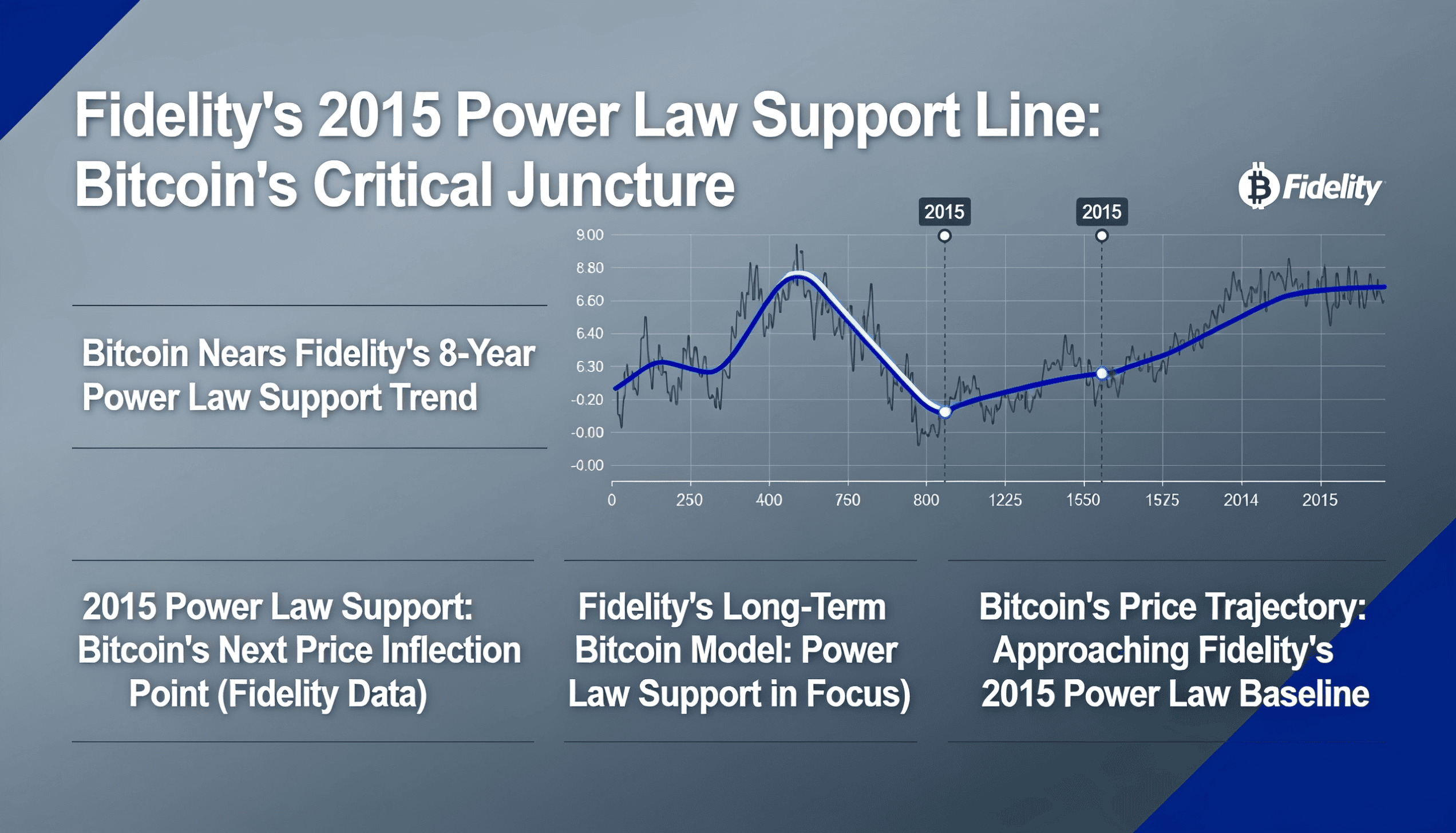
Jurrien Timmer, Fidelity’s global macro chief, sees the current range as an accumulation phase, but stresses that a clear catalyst for a rebound is still absent.
He says bitcoin is gradually sliding toward the lower boundary of a long-standing model he has tracked for years.
The model is based on a power law, plotting bitcoin’s entire price history on a logarithmic scale with three key bands: an upper resistance level, a central trendline, and a lower support line that has historically marked every major bottom since 2015.
In his latest chart, that support sits around $58,000, with bitcoin—now near $62,700—moving closer to it.
The lower band is where Timmer expects accumulation to occur. It measures how far bitcoin deviates from the trendline, and that gap has now widened to roughly -56%, a level associated with past accumulation zones seen during the 2018 and 2022 lows. At the same time, the 52-week bitcoin-to-gold ratio has dropped to about -100%, reinforcing the same signal.
Still, Timmer is not calling a bottom. He notes that the speculative premium that once pushed bitcoin above $120,000 has largely faded, global money supply growth is slowing, and there is no obvious trigger for a reversal until liquidity improves.
In his view, bitcoin could linger near this support level for an extended period rather than rebounding quickly.
He also points out that fast-moving capital has already rotated out of bitcoin—first into gold, and more recently into semiconductor stocks, where investor momentum is now concentrated.