cpeditor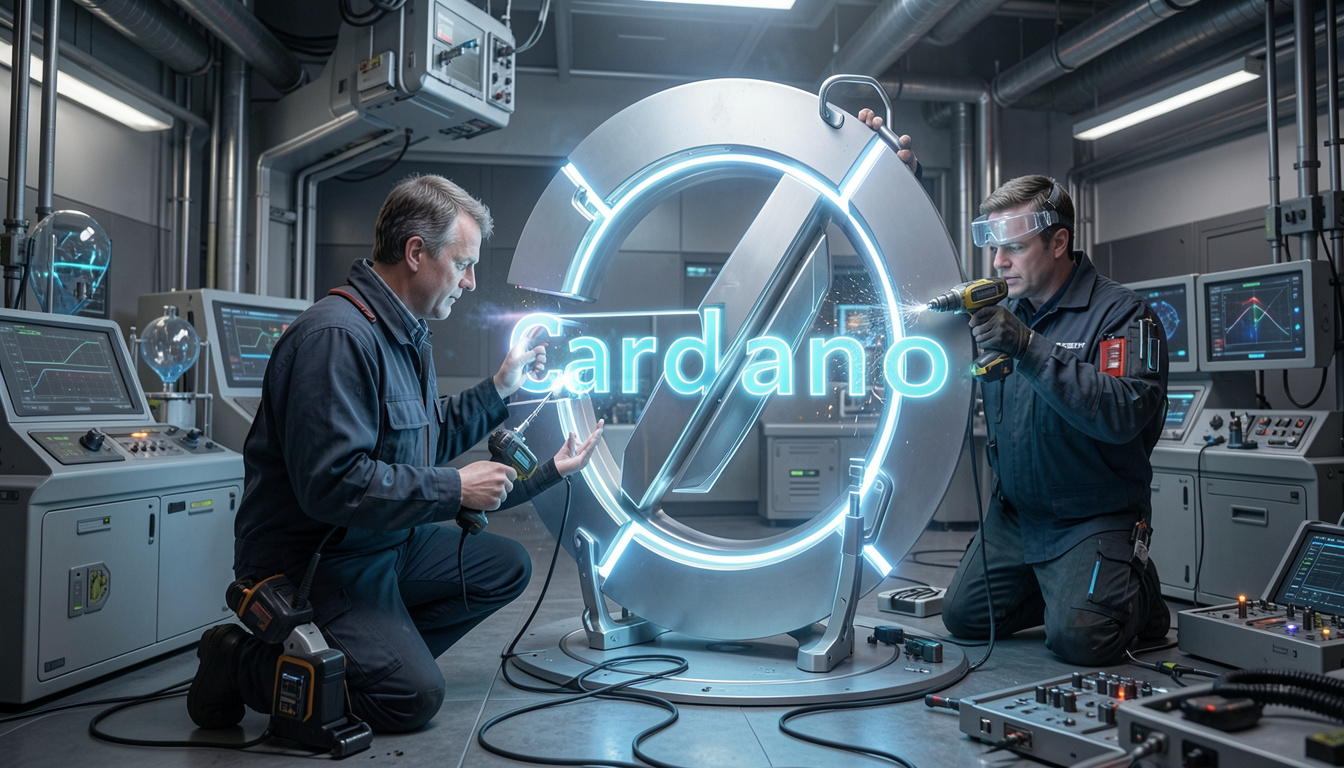
Cardano News: In a series of mid-June 2026 videos, Charles Hoskinson outlined what he positions as a structural reset for Cardano, combining governance reform, a coordinated DRep voting bloc, a revised constitution, and a renewed commercial strategy centered on Leios and Midnight.
Markets have yet to respond. ADA is trading near $0.16, down about 32% over the past month and back to levels last seen in 2020. The disconnect between rising narrative momentum and weak price action underscores the core challenge facing the plan.
The proposal rests on four pillars: moving governance discussions from X to a moderated Discord, forming a DRep coalition with automatic penalties for inactivity, introducing a new constitution with defined executive authority and growth metrics, and accelerating a commercial pipeline that includes Leios scaling, Midnight, cross-chain DeFi via the Pogan protocol, and a treasury model that takes equity-like stakes in ecosystem projects.
The scope is significant. Whether these components reinforce one another or remain individually insufficient will likely become clear over the next 90 days.
Meanwhile, as Cardano works through governance friction, Solana continues to build institutional traction, reshaping Layer 1 competition and amplifying the strategic implications of ADA’s stagnation.
Governance Overhaul: Key Proposals
At the center of the plan is a shift to a governance-focused Discord. Hoskinson argues that X incentivizes conflict and limits productive coordination, making it ill-suited for decision-making.
His alternative mirrors the Midnight community Discord, which scaled to around 49,000 members after filtering out bad-faith actors.
The Cardano version would incorporate zero-knowledge tools, enabling participants to engage and vote anonymously—reducing exposure to coordinated attacks during early-stage discussions.
The constitutional revision addresses gaps exposed by the Chang hard fork. While CIP-1694 introduced decentralized governance via DReps, SPOs, and a Constitutional Committee, it left executive authority unclear.
Hoskinson proposes defining elected roles, setting growth KPIs, and establishing a structured process for resolving competing budget proposals. Without clear metrics, he argues, treasury decisions risk devolving into ideological disputes.
Funding reform is a parallel priority. The proposed 2026 model introduces a three-layer framework: core infrastructure funding, strategic investments where the treasury acquires 10–30% token stakes, and support for user-facing layers such as wallets and fiat on-ramps.
Projects receiving funding would face stricter conditions, including oversight, cost discipline, and allocating 10% of protocol revenue to buying ADA and returning it to the treasury—creating a recurring demand loop rather than a one-time grant system.
ADA Near Cycle Lows: Market Waiting for Execution
ADA fell below the $0.20 support level on June 2 and dropped to $0.157 by June 6, marking its lowest levels since 2020. Heavy volume during the decline suggests capitulation rather than orderly repositioning.
A brief rebound toward $0.18 followed the governance announcements, but momentum faded quickly, with ADA slipping back toward $0.16. The former $0.20 support now acts as resistance, with Cardano’s market cap near $5.8 billion.
Hoskinson acknowledged the price dynamics, noting that ADA’s value is closely tied to Cardano’s security and utility.
That linkage is exactly what the market is assessing. Governance proposals alone do not improve fundamentals until they are executed and adopted.
Any announcement-driven premium has already faded. As seen in other ecosystems, strong development narratives are not enough—markets require visible execution.
For ADA to re-rate, tangible progress is needed. This includes a successful rollout of the governance Discord with active DRep participation, traction from the Leios testnet scheduled for June 23, initial treasury-backed investment deals, or evidence that the voting bloc can resolve the 600 million ADA funding backlog without triggering internal conflict.
These are execution milestones, not narrative catalysts—and for now, the market is waiting for proof.