cpeditor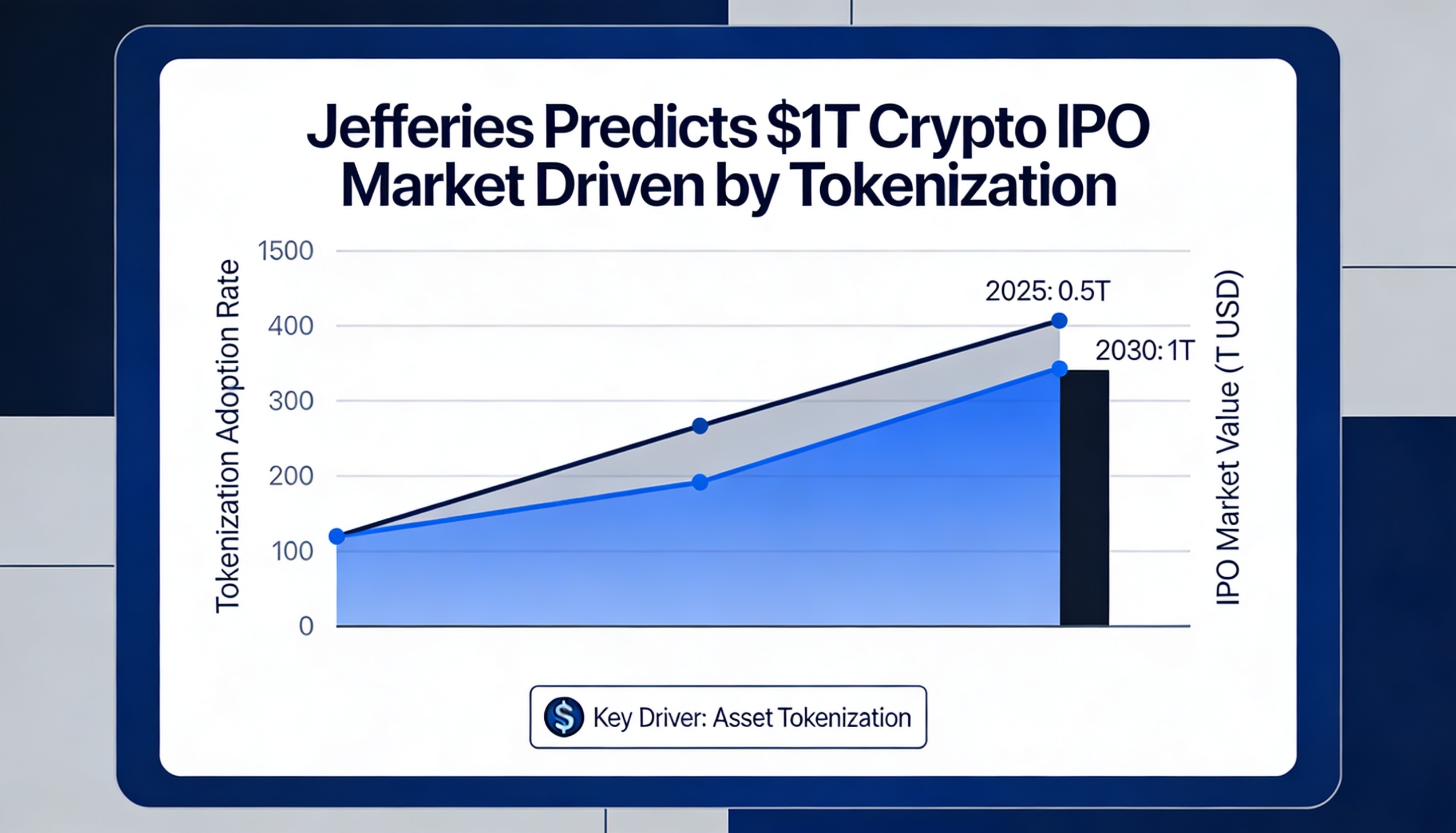
Jefferies sees the crypto sector entering a new phase of public market expansion, forecasting a wave of blockchain-related IPOs as institutional investors increasingly prioritize infrastructure over speculation.
In a report following its Digital Assets Investor Conference in New York, the bank said it expects a steady pipeline of crypto listings over the next two years, with the potential for the sector to reach a $1 trillion public market valuation within five years.
The conference, which brought together executives from dozens of digital asset firms and a broad base of institutional investors, highlighted a notable shift in focus. Discussions centered less on bitcoin’s price trajectory and more on how blockchain technology is being integrated into core financial systems.
Jefferies said investor sentiment is evolving alongside this transition. Clients are showing greater interest in companies building the underlying rails of digital finance, including exchanges, custodians, asset managers and payment providers, as blockchain adoption gains traction across traditional markets.
While IPO activity cooled after a strong 2025, the slowdown has largely reflected macroeconomic uncertainty rather than a loss of momentum in the sector. Jefferies expects issuance to rebound, with several crypto firms already progressing toward public listings.
Tokenization stood out as a key theme throughout the event. Market participants pointed to rapid developments in tokenized money market funds, private credit and blockchain-based settlement systems, many of which are now moving from pilot programs into active use as regulatory clarity improves.
The broader trend is mirrored across Wall Street, where financial institutions are adopting blockchain technology to enhance efficiency and unlock new revenue streams, largely independent of short-term movements in cryptocurrency prices.
Stablecoins and tokenized payments were also identified as major near-term growth areas, particularly in cross-border transactions where speed, cost and round-the-clock functionality offer clear advantages over traditional systems.
Jefferies emphasized that clearer regulation will be critical in sustaining this momentum, noting that proposed U.S. legislation on digital asset market structure could help accelerate institutional participation.
At the same time, collaboration between traditional financial firms and crypto-native companies is deepening, reflecting a shift toward partnership rather than competition in building blockchain-based infrastructure.
Across the board, investor attention is moving away from speculative corners of the market and toward business models that generate consistent revenue through trading, payments, lending and tokenized financial products.
Jefferies concluded that although the pace of change may appear gradual in the near term, the long-term impact of blockchain integration across global finance is likely to be transformative.