cpeditor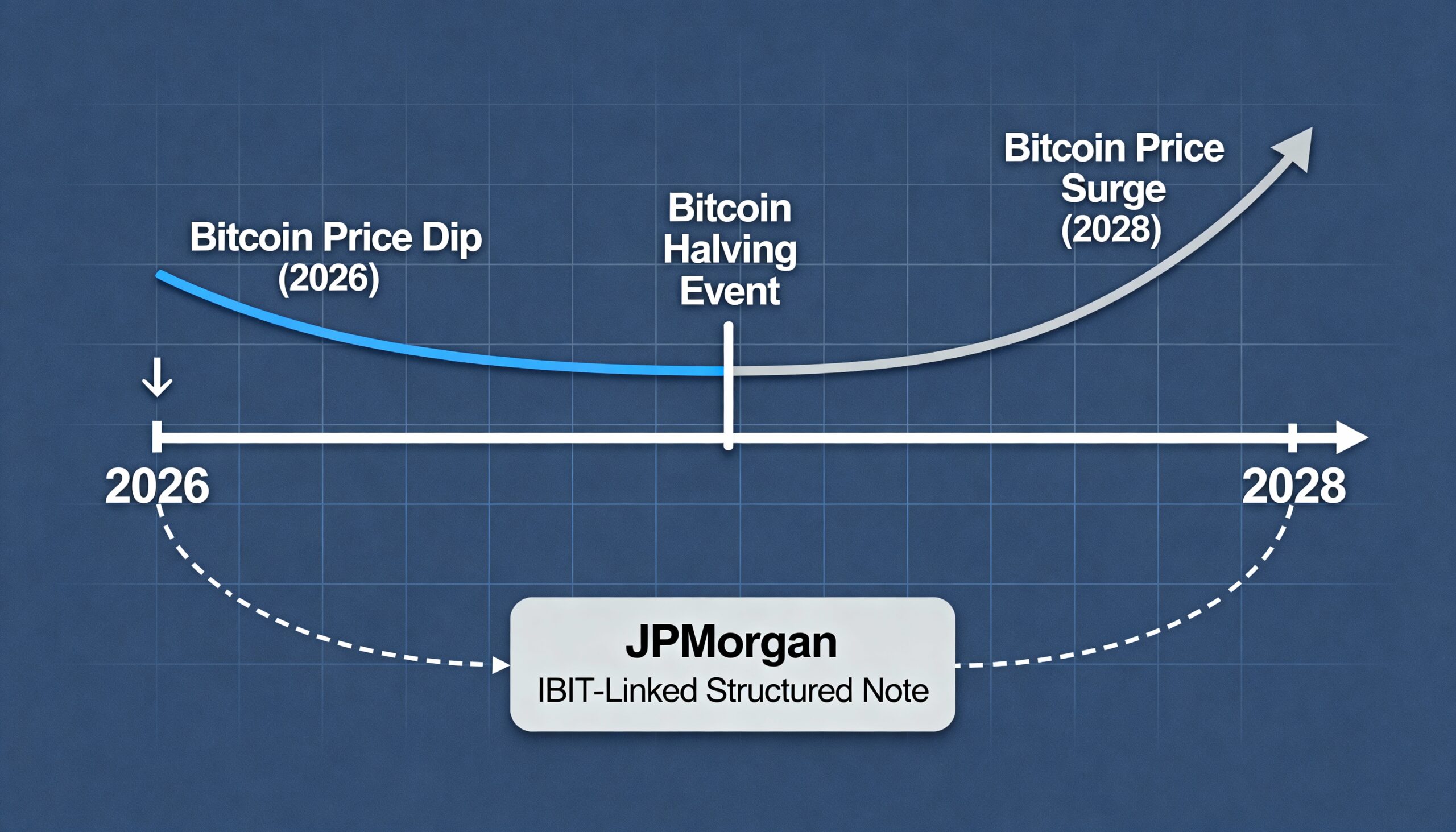
JPMorgan Launches Structured Note Linked to BlackRock’s IBIT, Aligned with Bitcoin’s Halving Cycle
JPMorgan Chase has introduced a new structured note tied to BlackRock’s IBIT, designed to align with Bitcoin’s BTC classic four-year halving cycle. The product caters to investors who believe in Bitcoin’s historical pattern of dips followed by rallies, providing a strategic way to gain exposure to the cryptocurrency’s cyclical trends.
Filed with regulators this week, the note offers investors a chance at potentially “uncapped” returns if BTC remains below a certain level in 2026 but rallies strongly by the end of 2028. Historically, Bitcoin tends to enter a bear market roughly two years after a halving event, followed by a renewed bull run in the halving year and the year after. With the most recent halving occurring in 2024, BTC is expected to face a downtrend in 2026, followed by a potential surge in 2028.
The note’s structure works as follows: if the IBIT ETF reaches or exceeds JPMorgan’s preset price by the end of 2026, investors receive a guaranteed minimum return of 16%. If IBIT stays below that threshold, the note remains active until 2028, giving investors exposure to amplified gains. Should IBIT surpass JPMorgan’s 2028 target, investors could earn 1.5 times their original investment with no upper limit, potentially delivering substantial returns if BTC rallies strongly.
The product also includes downside protection: investors can recover their principal in 2028 as long as IBIT does not fall more than 30% that year. However, if the ETF declines beyond that threshold, losses scale directly with the drop. JPMorgan cautions:
“The notes do not guarantee any return of principal. If the notes have not been automatically called and the Final Value is less than the Barrier Amount [30%], you will lose 1% of the principal for every 1% the Final Value is below the Initial Value. Under these circumstances, you could lose more than 40% of your principal or even all of it at maturity.”
This structured note arrives as Wall Street institutional investors increasingly seek strategic, nuanced crypto exposure, allowing them to position for Bitcoin’s historically observed cycles while managing downside risk.