cpeditor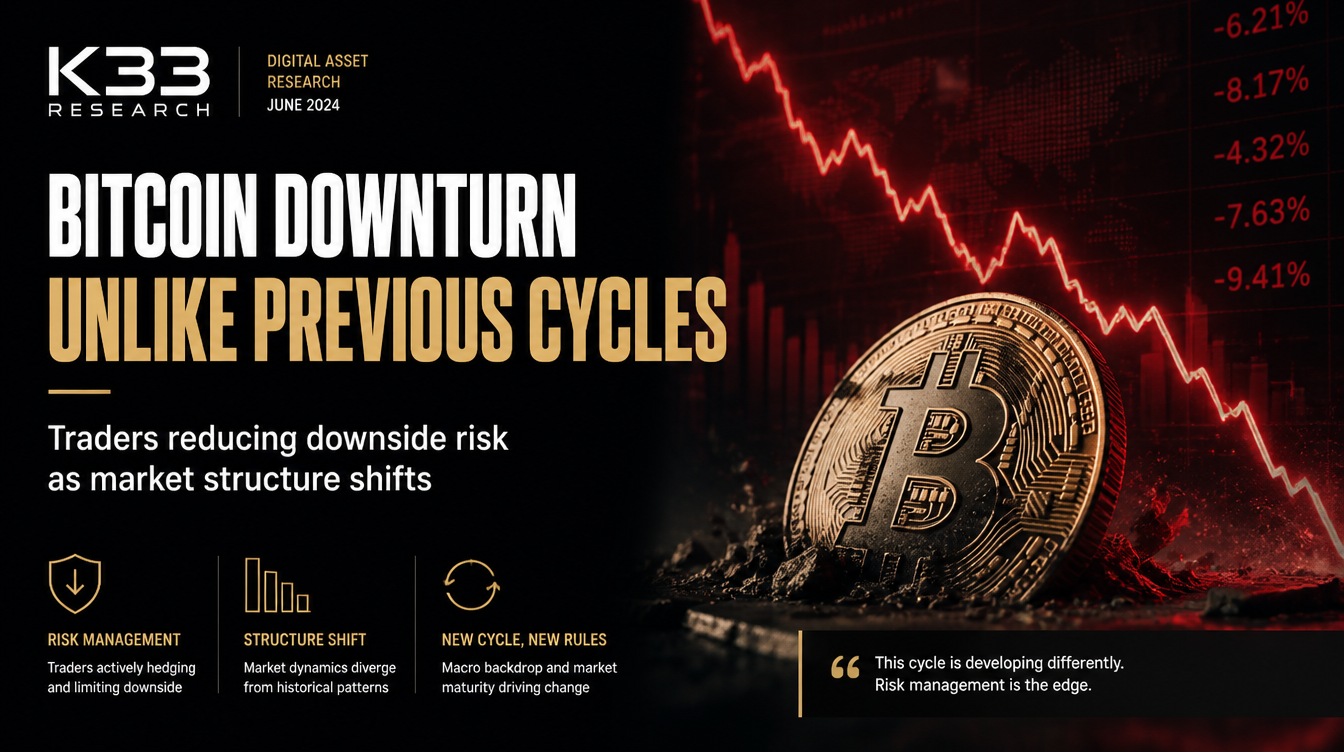
K33 Research says Bitcoin traders are positioned in an unusually defensive stance, a setup that may be limiting the risk of the sharp, leverage-driven breakdowns seen in prior bear markets.
Bitcoin BTC $77,190.69 recently failed to break above its key moving average near $83,000, reviving concerns that the market could be heading for another downside move.
Still, K33 argued in a Tuesday report that the current cycle looks meaningfully different from the 2014, 2018, and 2022 downturns, when similar technical rejections were often followed by aggressive selloffs.
In those earlier periods, Bitcoin typically rallied back toward the 200-day moving average before quickly rolling over as leverage rebuilt and crowded bullish positions unwound in cascading liquidations. According to K33, that pattern has not emerged in the current environment.
“The current slow grind has not produced such a dynamic,” wrote K33 head of research Vetle Lunde, pointing instead to derivatives data that reflects “uniquely pessimistic sentiment.”
One of the clearest signals is Bitcoin’s funding rate, which has remained negative on a 30-day average basis for 81 consecutive days — close to record levels. This indicates traders have stayed persistently bearish even during rebounds from February lows near $60,000.
CME Bitcoin futures also reflect caution, with annualized basis recently dropping below 2.5%, a level typically associated with weak risk appetite.
Despite this defensive positioning, K33 cautioned that risks have not disappeared. Open interest in Bitcoin derivatives remains elevated, leaving room for sharp volatility if conditions deteriorate. At the same time, U.S. spot Bitcoin ETFs have recorded $1.6 billion in outflows over five days as prices approached the $83,000 level, near the average cost basis for many ETF investors.
K33 noted that historically, investors tend to increase selling pressure when prices rebound toward breakeven after extended declines, a behavior that may be reappearing.
Even so, the firm said its internal indicators still resemble stronger phases of the market, such as the March–April 2025 rally when Bitcoin bottomed during tariff-driven volatility before pushing to new highs, rather than typical bear market relief rallies.
K33 continues to believe that Bitcoin’s February decline toward $60,000 likely marked the deepest drawdown of the current cycle.
“The less aggressive bull market of 2025 sets the stage for a more moderate bear market in 2026,” Lunde wrote, adding that $60,000 remains the firm’s base case for the cycle’s maximum downside.