cpeditor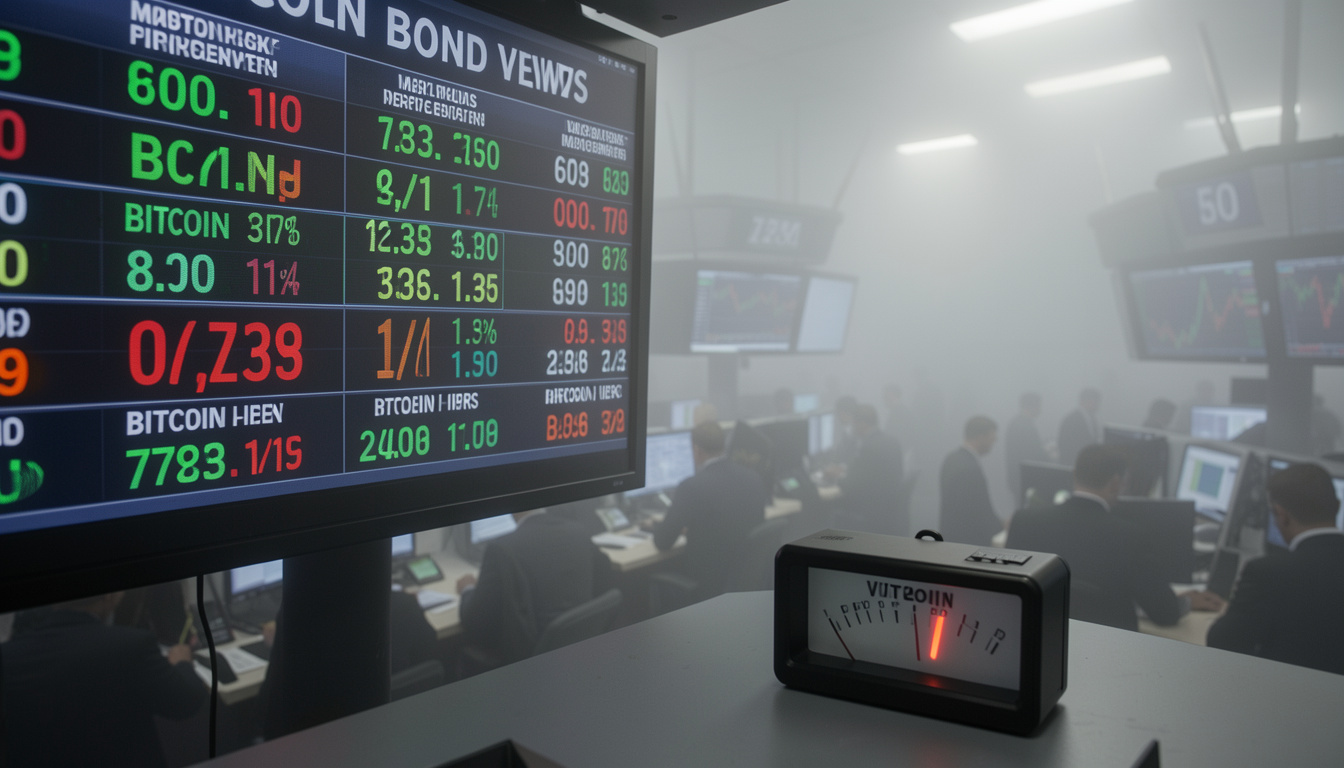
Bitcoin’s implied volatility remains unusually muted despite a recent price decline and tightening macro conditions, prompting options traders to flag a potential mispricing of future volatility.
Bitcoin BTC $77,249.23 has slipped in recent days, falling from about $82,000 to $77,000 since May 15. The move has come alongside rising U.S. Treasury yields, a backdrop that typically signals increased uncertainty across financial markets. However, Bitcoin’s options pricing has not reflected a corresponding jump in expected volatility.
Implied volatility, which captures the market’s expectations for future price swings, has stayed relatively steady through the selloff. That stability is drawing attention from derivatives desks that see a growing gap between macro conditions and crypto pricing.
The roughly 6% decline in Bitcoin has also coincided with notable outflows from spot Bitcoin ETFs and firmer Treasury yields. Meanwhile, stress in traditional markets is increasing, with the MOVE index—measuring implied volatility in U.S. government bonds—rising sharply from 69% to 85%.
In typical market conditions, rising bond volatility and risk-off flows would push crypto hedging demand higher, lifting implied volatility. So far, that transmission has been limited.
Bitcoin’s 30-day annualized implied volatility index (BVIV) remains near 42%, according to TradingView data, only modestly above its year-to-date low near 40%. This suggests options markets are still pricing in relatively calm conditions despite broader financial turbulence.
That disconnect between macro volatility and subdued crypto pricing has led some traders to argue that risk is being underappreciated in the options market.
“In the options market, BTC IV is historically low: implieds have compressed to the high-30s/low-40s, printing new 2026 lows. That’s cheap vol in absolute terms,” said Jean-David Péquignot, Chief Commercial Officer at Deribit, the largest crypto options exchange, which handles more than 70% of global crypto options volume.
He added that low-volatility environments often favor strategies that bet on large price swings rather than direction. One such approach is the long straddle, which involves buying both a call and a put option at the same strike price and expiration.
This structure allows traders to profit from significant moves in either direction—gains on the call if Bitcoin rises, or gains on the put if it falls. It is commonly used when investors expect volatility to increase but are uncertain about direction.
“BTC vol being this cheap while price is at a key breakout level can be a good setup for long vol / long straddle positioning ahead of a macro catalyst (next CPI print, Fed speech),” Péquignot said.