cpeditor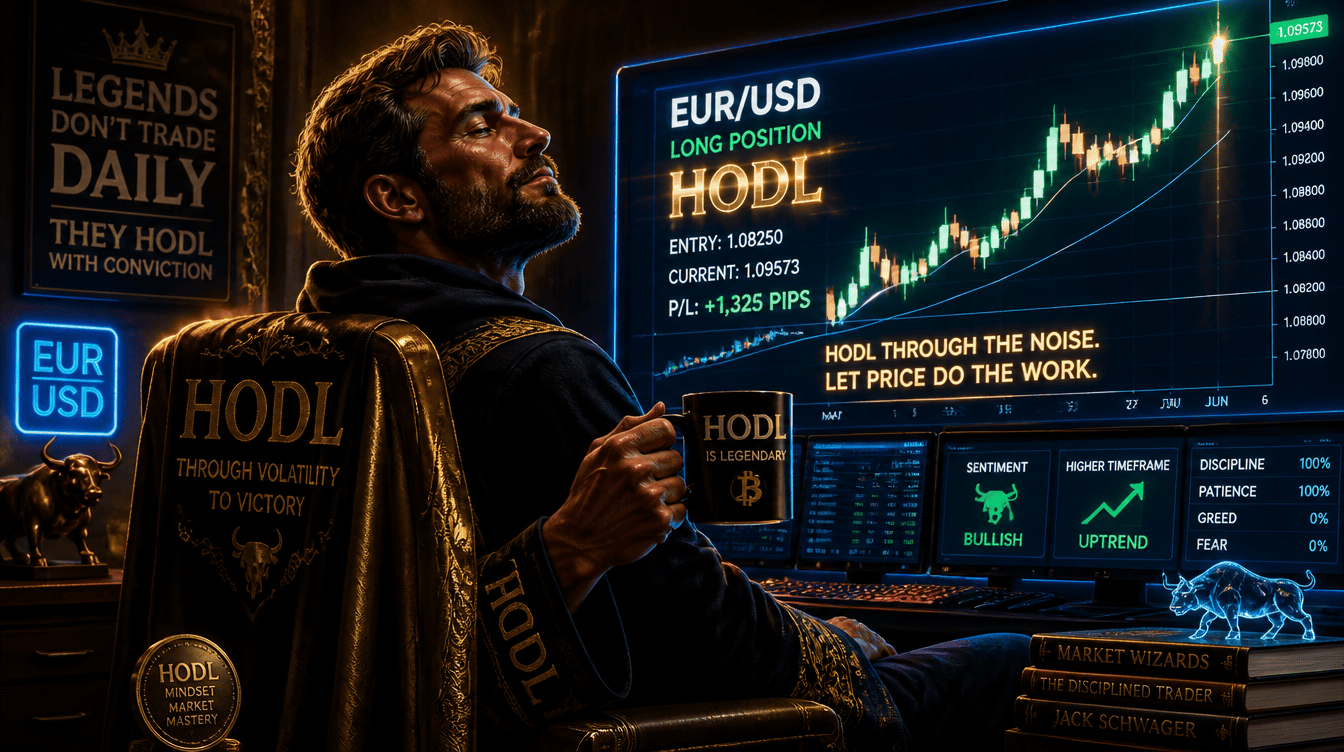
Trader applies Bitcoin’s long-term HODL mindset to a $1.14M EUR/USD bet
A trader on Ostium has kept a $1.14 million long position in EUR/USD perpetual futures open for 400 days, adopting a strategy commonly associated with Bitcoin investors and applying it to the traditional forex market.
The term “HODL” — a crypto phrase describing the practice of holding assets over the long term despite market swings — has historically been linked almost entirely to Bitcoin and Ethereum.
Now, the same buy-and-hold philosophy has been applied to a perpetual futures contract tracking the euro-dollar exchange rate on Ostium, a decentralized trading platform powered by Nasdaq data.
Ostium said the trader has maintained the EUR/USD position, currently worth around $1.14 million, for 400 days. The trade was initiated in early June 2025 and reflects a bullish view that the euro will gain value against the U.S. dollar.
At the time of reporting, the EUR/USD pair was trading above 1.14, remaining close to its level from a year earlier. The currency pair had previously reached a high of 1.2082 in January.
Decentralized foreign exchange platforms, including Ostium, Gains Network, Synthetix, and GMX, are still a very small segment of the global currency market, which handles more than $9 trillion in daily trading volume.
Nevertheless, the 400-day position demonstrates that some traders are increasingly willing to use blockchain-based infrastructure and perpetual contracts to gain leveraged exposure to traditional financial assets.
Ostium noted that maintaining the trade resulted in holding costs of roughly 2.3% per year through its rollover fee mechanism.
Unlike crypto perpetual futures, which typically use funding rates involving regular payments between long and short positions, Ostium applies volatility-based rollover fees for forex contracts. The system is designed to more closely resemble traditional FX swap and rollover structures.
Because these fees are more consistent and transparent, traders can better predict the cost of maintaining long-term positions. Whether this example encourages broader adoption of on-chain trading for traditional markets remains an open question.