cpeditor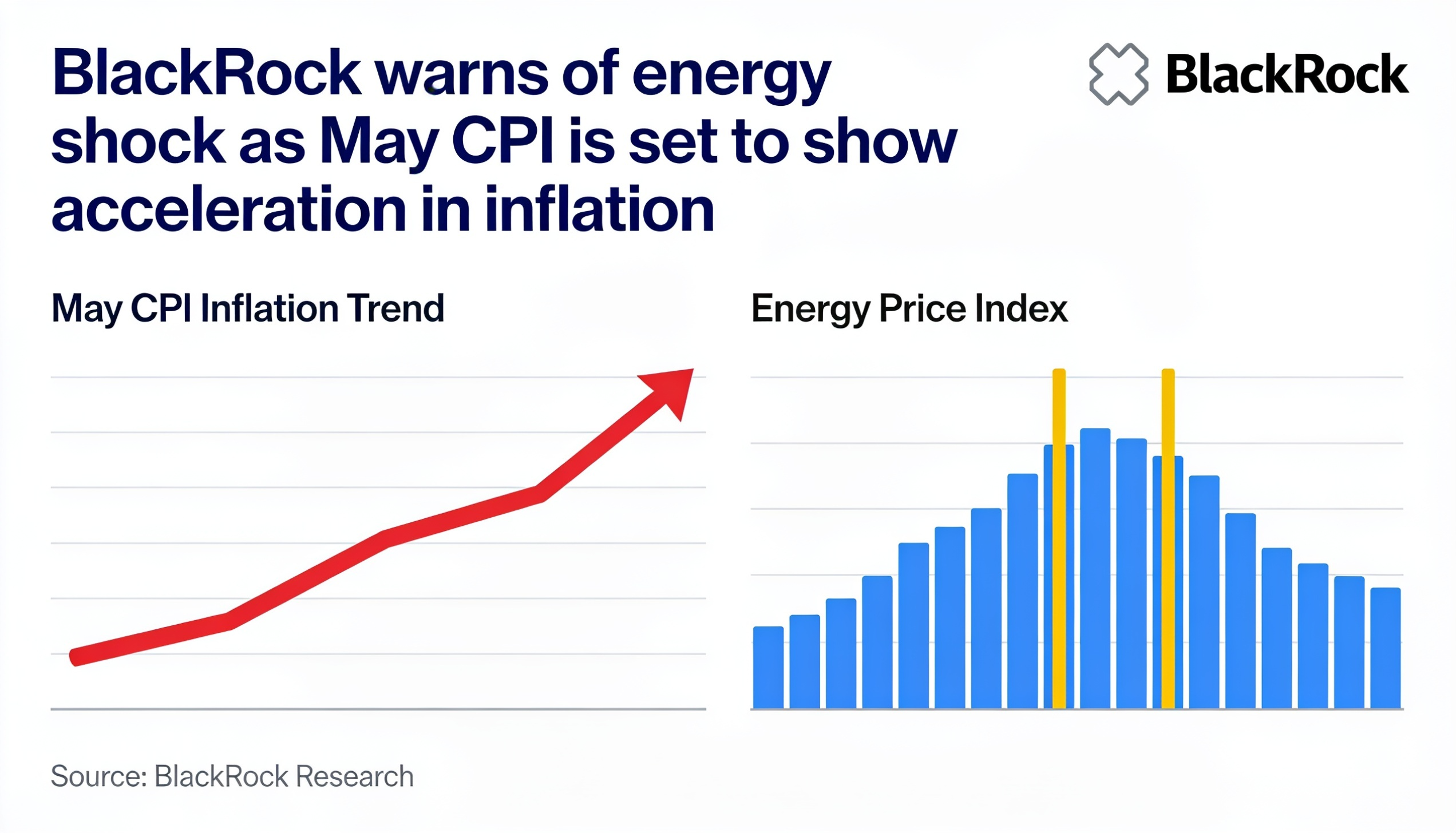
BlackRock is closely tracking Wednesday’s CPI release as an early gauge of how escalating U.S.-Iran tensions could be feeding into already elevated inflation pressures in the U.S. economy.
The firm is also focused on the May inflation report for clearer evidence of how the ongoing geopolitical conflict is amplifying persistent price pressures.
In its weekly commentary, BlackRock Investment Institute said, “We look to May U.S. inflation figures for a clearer read on how the Mideast conflict energy shock is impacting already sticky inflation. The full breadth of the shock has yet to show and will depend on how it evolves.”
The May U.S. Consumer Price Index is scheduled for release on Wednesday at 08:30 am ET. According to Reuters-polled economists, inflation is expected to rise 4.2% year-on-year, the highest reading since April 2023 and above April’s 3.8%.
If confirmed, this acceleration would reinforce concerns that inflation remains stubbornly above the Federal Reserve’s 2% target, increasing the likelihood that policymakers may consider further rate hikes rather than the cuts markets had previously priced in.
Higher interest rates tend to weigh on risk assets, including cryptocurrencies. A hotter CPI print could therefore add pressure on crypto markets, especially after Bitcoin already fell nearly 14% last week, dropping below $60,000.
BlackRock also highlighted a key downside risk: a prolonged closure of the Strait of Hormuz extending into July. Such a disruption could intensify the energy-driven inflation shock, particularly if U.S. oil inventories fall toward their lowest levels in 40 years.
As the firm noted, “We think a prolonged closure of the Strait of Hormuz into July could bring the impact of the shock to the fore more prominently, especially as U.S. oil inventories potentially hit four-decade lows.”