cpeditor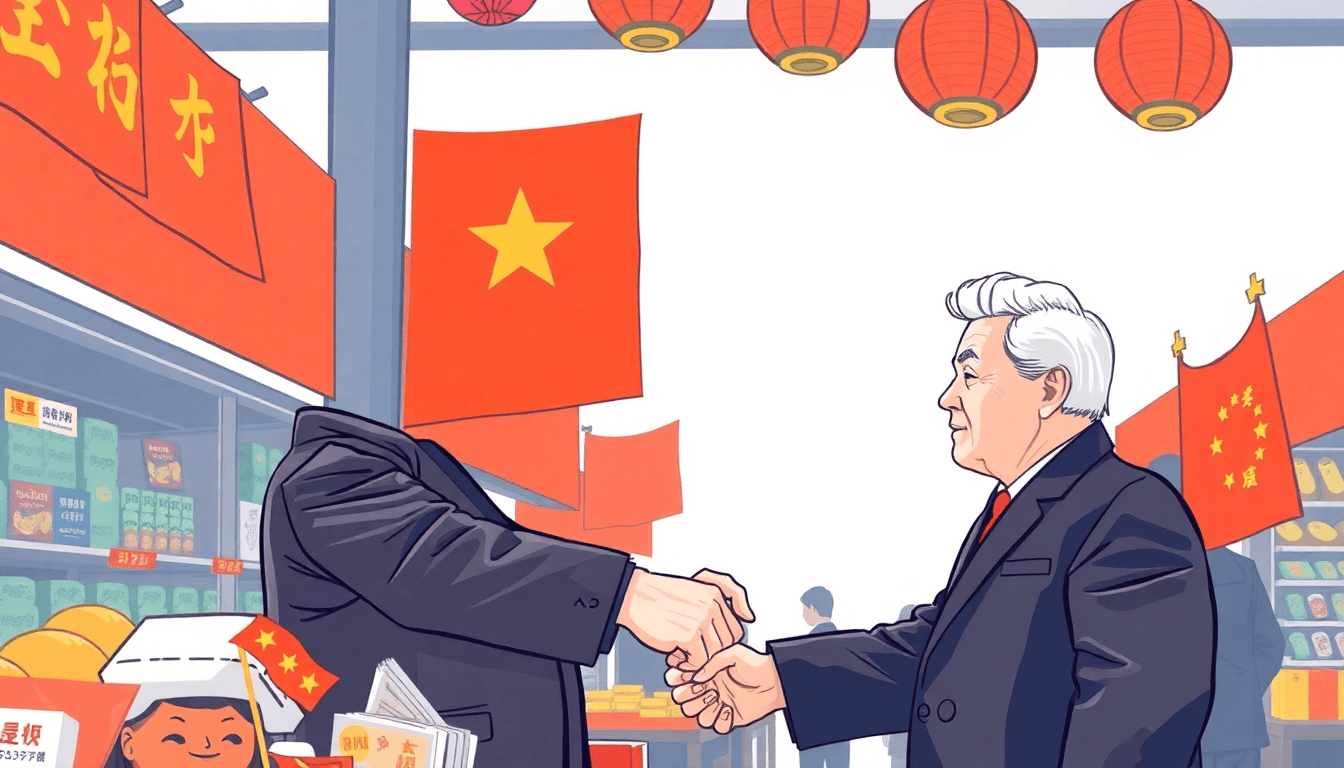
A handshake lasting 10-15 seconds between Donald Trump and Xi Jinping is currently the leading outcome in a Polymarket contract tracking how the two leaders will greet each other at their September 24 meeting in Washington. Traders are assigning the scenario roughly 50% odds.
The same market gives a hug a 5% probability and a kiss just 1%. The contracts focus on the leaders’ visible interaction rather than the potential outcome of their diplomatic discussions.
As of September 22, the handshake market had recorded around $4,200 in trading volume and $57,800 in liquidity. That is a small fraction of the roughly $30.6 million in combined volume across Polymarket’s wider Trump-Xi prediction dashboard.
The broader markets cover issues such as potential tariff agreements, AI cooperation and Taiwan-related developments, giving them considerably more direct policy significance than the greeting contracts.
Market Pricing Favors a Formal Greeting
The 10-15 second range is intended to represent a measured, protocol-driven greeting, according to the market’s description.
Trump and Xi maintained a cordial public tone during their May meeting in Beijing, despite continuing disagreements over Taiwan and other areas of U.S.-China relations.
The latest pricing appears consistent with expectations of another formal encounter. Preparatory talks in New York have reportedly focused on extending the bilateral trade truce, AI safety mechanisms and other non-sensitive trade matters.
However, those discussions do not establish whether the upcoming summit will produce lasting agreements.
The handshake contract has a straightforward resolution based on video footage. It can therefore settle based on the duration of the greeting, regardless of what happens during private negotiations.
Small Market With a Clear Resolution
The difference between the greeting contracts and the broader Trump-Xi markets illustrates the limits of prediction markets tied to visible events.
The larger Trump-Xi dashboard has attracted significantly more capital because its contracts cover issues such as tariffs and trade policy. The handshake, hug and kiss markets have much smaller volumes but offer outcomes that can be verified almost immediately.
If Trump and Xi shake hands for 10-15 seconds on September 24, the currently favored scenario would be met. A noticeably shorter or longer handshake would fall outside the specified range.
A hug has a 5% probability under current pricing, while a kiss stands at 1%, making both less frequently traded outcomes.
The odds can still change before the summit as traders respond to new information and market activity.
Whatever the final greeting looks like, the contract will resolve a narrow question about the leaders’ public interaction. It will not determine whether the trade truce is extended, whether the two sides reach an AI agreement or how the broader U.S.-China relationship develops.