cpeditor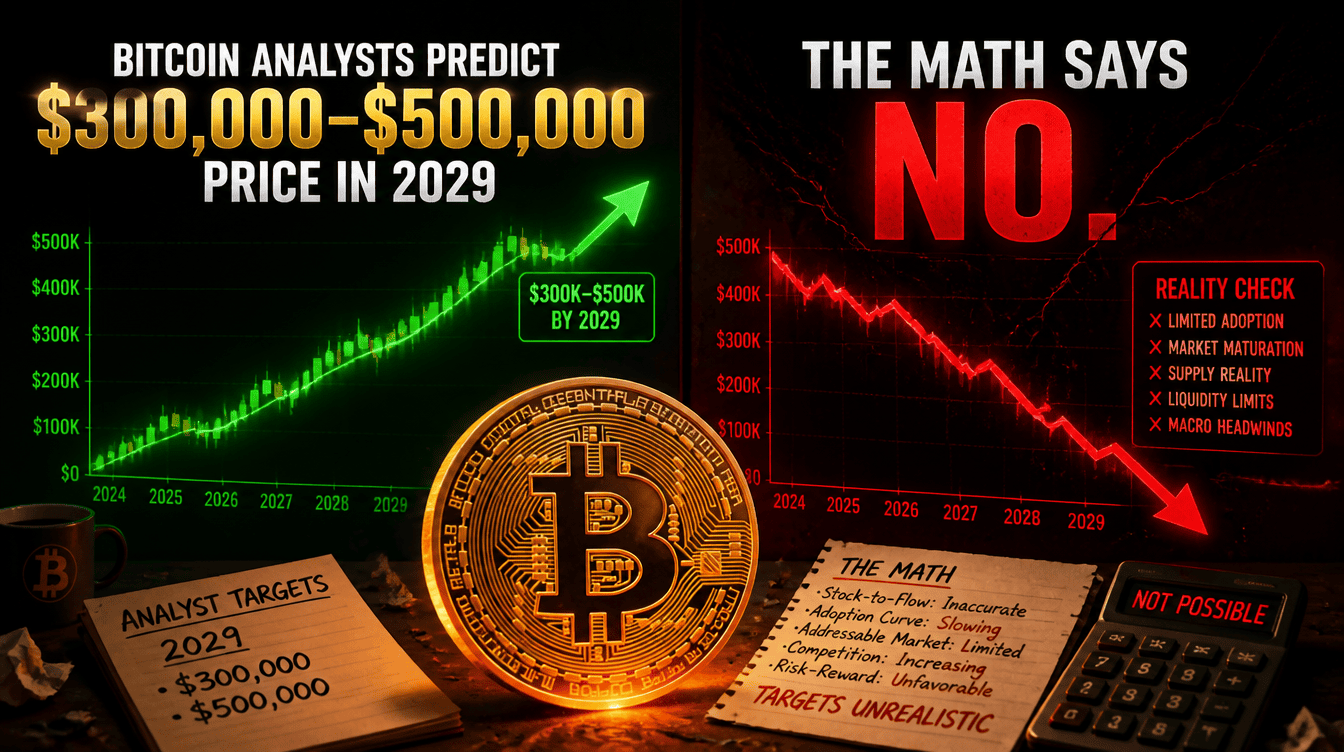
Analysts are projecting bitcoin could surge to $300,000 or higher by 2029, with some forecasts stretching to $500,000. However, key metrics suggest those kinds of dramatic gains may be less achievable as the asset continues to mature.
Bitcoin moves in a distinct four-year cycle tied to its halving events, which reduce new supply by 50% every four years. The first halving took place in 2012, and the next is expected in April 2028. Historically, the market bottoms about 18 months before a halving, followed by a rally that peaks roughly 16–18 months after—placing the next potential cycle top around 2029.
This framework has fueled bullish predictions. Veteran trader Peter Brandt sees bitcoin reaching between $300,000 and $500,000. Analysts at Bernstein, including Gautam Chhugani and Mahika Sapra, also forecast a $500,000 price, citing strong demand from spot ETFs.
Yet historical performance points to a different trend. While each cycle has delivered new highs, the magnitude of gains has steadily decreased:
- 2013: $266
- 2017: nearly $20,000 (~75× growth)
- 2021: around $69,000 (~3.5× growth)
- 2025: about $126,000 (~1.8× growth)
These shrinking returns indicate that as bitcoin’s market size expands, much larger capital inflows are needed to drive price increases. If this pattern continues, the next peak could fall well short of the widely predicted $300,000–$500,000 range, since even reaching $300,000 would require more than doubling from the 2025 high.
This shift doesn’t imply weakness—it reflects maturation. Bitcoin is evolving into a more institutionalized asset, supported by a growing ecosystem of ETFs, futures, options, and other structured products. As a result, volatility is decreasing and price movements are becoming more measured, resembling traditional financial markets.
Some bullish arguments remain. Supporters point to potential catalysts like aggressive Federal Reserve stimulus or bitcoin adoption as a reserve asset by the U.S. Treasury. However, even the massive global stimulus following the 2020 pandemic only lifted bitcoin to around $70,000 in the next cycle, marking slower growth than before. Similarly, the 2025 peak—despite strong institutional participation—delivered a smaller multiple.
Overall, the data suggests bitcoin is stabilizing as it grows. The era of explosive “moonshot” rallies may be fading, replaced by steadier, more sustainable gains—meaning investors may need to temper expectations of another parabolic surge.